
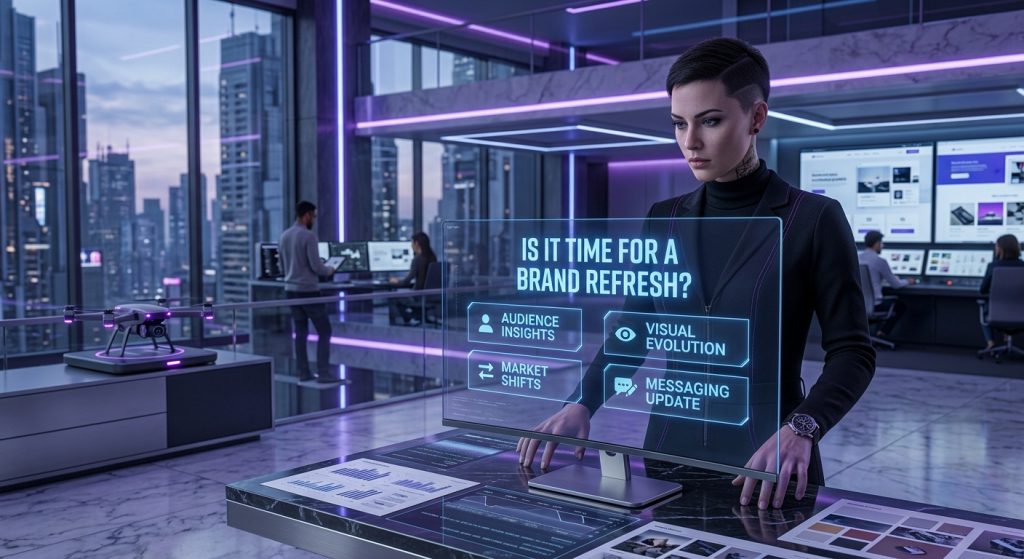
Every business owner gets the itch eventually. You look at your logo one too many times and it suddenly feels dated. A competitor launches a slick new website and yours looks like it was built in 2014. (Maybe it was.)
Sometimes that itch is right. A lot of the time, though, it's plain boredom. You see your brand every single day, so of course you're tired of it. Your customers see it a few times a month, and to them it still means you.
So before you call a designer, ask yourself a harder question: is the brand actually the problem?
Signs it really is time
You've outgrown your own name
You started out doing one thing. Now you do four. If your name or tagline still describes only the first thing, you're spending every sales call explaining what else you do. That's a brand doing less work than it should.
The wrong people keep showing up
Pay attention to who reaches out. If you keep getting inquiries from people expecting a cheaper service, a different product, or a crowd you don't serve anymore, your brand is sending a signal you didn't mean to send.
Your own team can't explain it
Ask five people on your team what the company stands for. If you get five different answers, customers are getting mixed messages too.
Something big changed
A merger, a new partner, a new location, a whole new direction. When the business underneath changes, the brand on top usually has to catch up.
The name carries baggage
Maybe it's tied to a former partner, an old scandal, or a chapter of the business you've closed. If people bring that up when they hear your name, it's costing you.
It falls apart where people actually see it
A lot of logos were designed for a business card. Now they live as a tiny circle on Instagram, a favicon in a browser tab, and a dark-mode email header. If yours turns into an unreadable smudge at 40 pixels, that's a practical problem.
Reasons that sound good but usually aren't
You're bored with it. We covered this one. Your boredom and your customers' recognition are two very different things.
A competitor just rebranded. Copying their timing puts you in a reactive spot. Let them spend the money and see how it lands.
Sales are down. This one is tempting, and it's almost never the logo's fault. Slow sales usually come down to pricing, product, follow-up, or how often people hear from you. A new look on top of the same problems gets you the same results in nicer colors.
Someone new wants to make their mark. New marketing hires love a rebrand. Sometimes they're right! Make them show you which of the signs above they're seeing first.
Everyone's doing that look right now. Trends move fast. A brand built on this year's fonts will look like this year in three years.
A refresh might be all you need
There's a big middle ground between "leave it alone" and "burn it down."
A refresh keeps your name and the core of your look. You clean up the logo, update the color palette, pick better fonts, and reshoot your photos. People still know it's you. It just looks like you got a good night's sleep.
A full rebrand changes the name, the positioning, or both, and usually the whole visual identity with it. It's a bigger investment, and you'll spend months reintroducing yourself.
Here's a quick gut check. If your customers like you and would be confused by a new name, refresh. If the name itself is part of what's holding you back, that's when you go all the way.
How to do it without losing the people who already love you
Start with words before pictures. Write down who you serve now, what you promise them, and how you want to sound. If you can't get that onto one page, a designer can't fix it with a logo.
Talk to your best customers. Ask them why they picked you and what they'd tell a friend. Their answers are usually more useful than anything you'll come up with in a brainstorm.
Keep something familiar. A color, a shape, a phrase people already connect with you. That thread helps your regulars recognize you on the other side.
Launch everywhere at once. A half-updated brand looks worse than an old one. Before launch day, make a list and have everything ready to flip:
• Website and favicon
• Social profiles, avatars, and cover images
• Email signatures and newsletter templates
• Google Business profile and any directory listings
• Invoices, contracts, and forms
• Signage, print pieces, and merch
Tell people why. A short, honest note about what changed and why goes a long way. Customers handle change fine when they feel included in it.
Then give it time. Your gut will hate the new look for the first few weeks because it's unfamiliar. Wait a few months before you judge whether it's working.
Before you pull the trigger
A rebrand costs real money and a lot of attention, so it should solve a real problem. If you can point to something specific in the business that's changed, go for it. If you can't, put that budget into marketing the brand you already have.
Not sure which side you're on? That's the conversation we like to have first at HMI Multimedia. Tell us what's changed, and we'll give you a straight answer, even if that answer is "keep what you've got."